
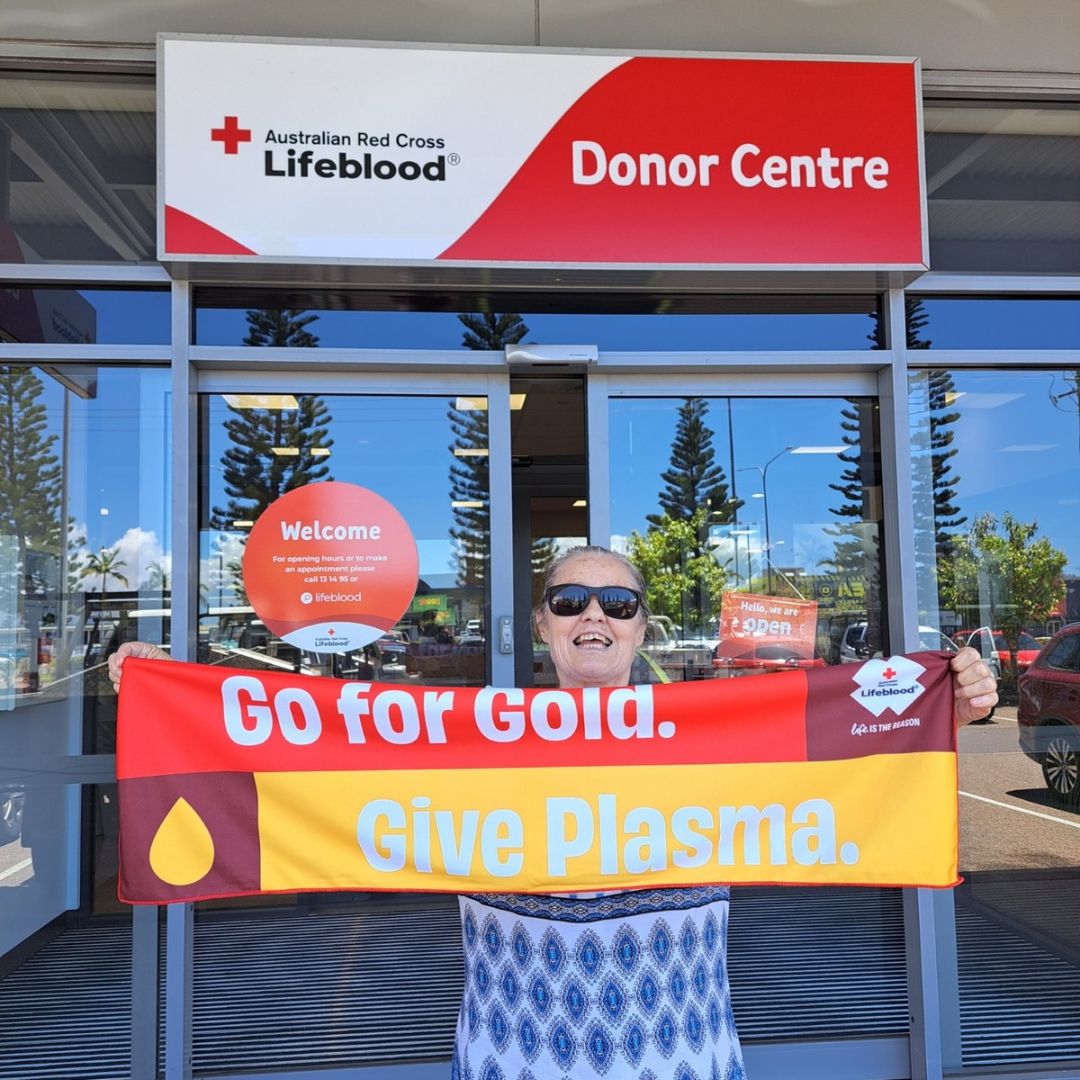
It would take years of persistence, a life-threatening illness and a long road through hospital before Teresa finally received answers: she was living with Common Variable Immunodeficiency (CVID).
Looking back, Teresa remembers how difficult it was to explain what she was experiencing when even she couldn’t understand why her body was letting her down.
“I knew something was wrong. I just didn’t know what it was.”
Teresa’s health began to deteriorate in 2003. Blood tests showed early abnormalities, including slightly low globulin and protein levels, but these findings did not lead to a diagnosis. As her symptoms continued, she repeatedly sought medical help, but struggled to get anyone to understand how unwell she felt.
In 2005, feeling increasingly ill, Teresa made the difficult decision to move to Western Australia, hoping for a fresh start. She found work and did her best to carry on, but her health continued to suffer. Every day became a battle to get through the basics. She would go to work, come home completely depleted and have nothing left by eight o’clock in the evening. She was regularly fighting temperatures and migraines, and even everyday activities could feel overwhelming.
“I’d go to work, come home and have absolutely nothing left. I was exhausted, but I just kept going.”
At times, Teresa questioned herself. Perhaps it was smoking, her age or something else entirely. After years of feeling unheard, she began to doubt whether anyone would believe her if she explained just how bad things had become.
But Teresa knew her body, and she knew this wasn’t normal.
Her health struggles had begun long before this period. At 28, she had been hospitalised with meningitis for nine days, with her condition serious enough to be touch and go. At the time, there was no indication that an underlying immunodeficiency might be contributing to her illness.
Despite everything, Teresa remained determined to work and spend as much time as possible with her children. She wanted them to see the importance of a strong work ethic and to make memories together while she could. Even when she was struggling, she pushed herself to keep going, determined to make the most of the time and energy she had.
Eventually, Teresa returned to Townsville around 2009–2010, continuing to work while trying to manage her worsening symptoms. Her son noticed how unwell she looked and sounded, particularly her persistent cough. Concerned, he urged her to see a doctor.
Teresa was reluctant. After years of feeling unheard, she worried that doctors would think she was making her symptoms up.
“I didn’t want to go back to the doctor because I was frightened they wouldn’t believe me. I’d been feeling like this for so long, and I didn’t know how to make them understand.”
Her son insisted that something wasn’t right and helped her take the next step.
In 2010–2011, Teresa finally sought further medical attention. Initially treated for a respiratory infection, she was given antibiotics and sent for X-rays. But her condition continued to deteriorate, and she eventually required admission to Townsville Hospital.
There, doctors became concerned about possible lymphoma after scans revealed enlarged lymph nodes in her lungs. Teresa found herself on an oncology ward, frightened and exhausted, struggling to breathe and unsure what was happening to her body.
Further investigations led to more questions than answers. Teresa was eventually able to travel to Wodonga, where her mother lived, to continue seeking medical care. Her mother picked her up from the airport and took her straight to a local doctor, who arranged further investigations and referrals.
Teresa underwent scans and specialist assessments in Melbourne as doctors worked to understand what was causing her severe illness. The possibility of cancer remained a frightening concern. However, further testing, including a lung biopsy, ruled out lymphoma and identified a serious lung infection: Pneumocystis jirovecii pneumonia.
Blood tests also pointed towards CVID.
By this stage, Teresa’s condition had become critical. She experienced severe respiratory failure and required an ambulance transfer to hospital, where she needed high-flow oxygen. Even with oxygen support, her levels could drop dangerously low when she walked. Something as simple as going to the toilet became frightening.
“Every time I got up to go to the toilet, my oxygen levels would drop. I was so frightened. I didn’t know if I was going to make it.”
Her family was told how seriously ill she was, and there were real fears that she might not survive.
Teresa received high-dose steroids, which helped improve her condition, alongside ongoing antibiotics and intensive medical care. After years of unexplained symptoms, she was finally getting closer to understanding what was happening.
In 2012, Teresa’s blood results supported a diagnosis of Common Variable Immunodeficiency (CVID), with her immunoglobulin levels extremely low. CVID is a primary immunodeficiency that affects the immune system’s ability to produce enough effective antibodies, leaving people more vulnerable to infections and other complications.
For Teresa, receiving a diagnosis came after years of feeling unwell, searching for answers and questioning whether anyone truly understood what she was going through.
“It was a long time coming. I’d spent years trying to explain that something wasn’t right, and by then I was so unwell.”
There was still a long road ahead. Further blood tests and specialist appointments were needed before she could begin immunoglobulin replacement therapy. In 2013, Teresa was confirmed to be eligible for treatment.
Today, Teresa receives intravenous immunoglobulin (IVIg) in hospital once a month. While treatment helps manage her CVID, the impact on her health has been significant. Her lung capacity has remained at around 64 per cent for years, and she continues to manage complications affecting her lungs and liver.
Her journey has been a reminder that finding an answer doesn’t necessarily mean everything becomes easy. Living with CVID means continuing to manage her health while making space for the rest of her life.
Outside her health challenges, Teresa finds happiness in the simple things that help her feel connected to the world around her. She loves animals and shares her home with her cat and her dog, Banjo. She also enjoys going for drives with friends a couple of times a week, taking in the scenery, stopping for coffee or ice cream, and listening to music along the way.
Teresa has a creative side, too. She enjoys making mosaics using glass and ceramics, often finding interesting pieces at second-hand shops and transforming them into decorated vases and other creations. Although she doesn’t have as much energy for these projects as she once did, creating something with her hands remains something she loves.
At home, she enjoys watching Netflix and spending time with her daughter, appreciating the quieter moments when her energy allows.
Living with an immunodeficiency can mean never quite knowing how much energy you’ll have from one day to the next. For Teresa, learning to navigate those ups and downs is part of life. She makes the most of the times when she feels well enough to get out, see friends and enjoy the things that matter to her.
Reflecting on her journey, Teresa wants others who are struggling to find answers to know that they are not alone. She understands how exhausting it can be to keep asking questions when you feel that no one is listening, particularly when your symptoms are difficult to explain.
Her advice to anyone who is at the beginning of their immunodeficiency journey is simple.
“Hang in there, and don’t give in. If they tell you you’re crazy, you’re not. Self-advocate.”
Teresa knows firsthand how important it is to trust yourself when something doesn’t feel right. Her journey involved years of uncertainty, a frightening fight for her life and the determination to keep searching for answers, even when the path forward was unclear.
Today, she continues to live with CVID and its ongoing complications, finding joy in her family, her friends, her animals and the everyday experiences that bring her happiness.
By sharing her story, Teresa hopes others will feel encouraged to speak up, seek support and keep pushing for answers. Because sometimes, the first step towards getting the help you need is trusting that what you’re experiencing is real.