
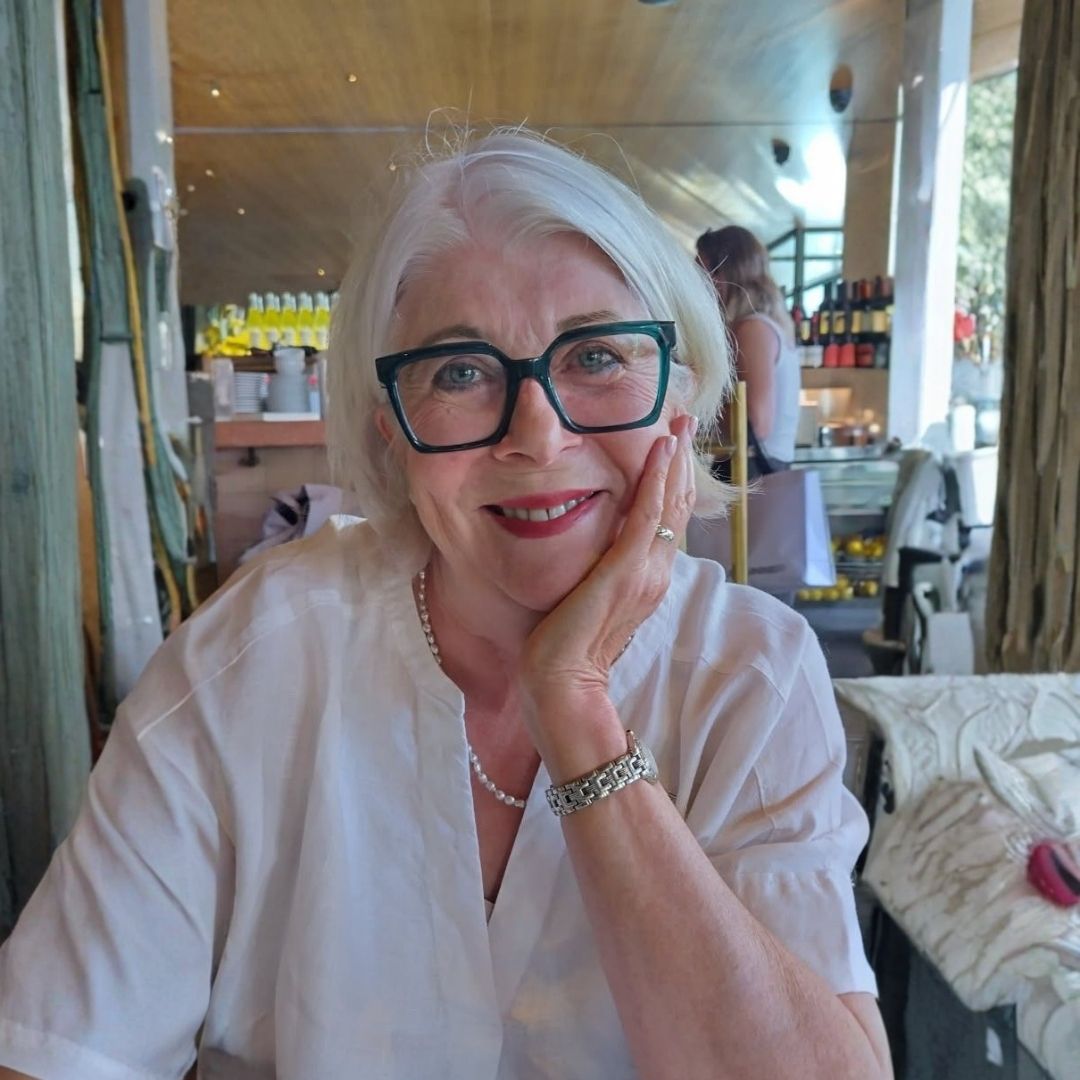
Kimmy has spent her life caring for others.
As a midwife for more than 40 years, supporting women and families through some of life’s most significant moments has become part of who she is. Even now, as she transitions into semi-retirement, she still works part-time in antenatal care because she enjoys contributing to something meaningful.
“I still like feeling that I’m making a difference.”
Originally from the United Kingdom, Kimmy trained as a midwife in London before moving to Australia as part of an international recruitment program in 1985. Her career has taken her from the Northern Territory to Sydney and eventually Tasmania, where she and her partner, Steve, built the home they’ve lived in for more than 25 years.
Outside of work, Kimmy leads a busy life. She walks her beloved Bedlington Terrier, Possum, every day, enjoys cooking, completing jigsaw puzzles, and has recently taken up mahjong with friends. She also volunteers with a local driver mentoring program, helping learner drivers gain the confidence and experience they need to earn their licences.
“Helping people have that independence is really rewarding.”
Although Kimmy’s CVID diagnosis only came recently, the clues had been there for decades.
As a child, she suffered from severe asthma and recurrent chest infections, missing almost two years of school. Every cold seemed to develop into bronchitis or pneumonia. Her father became her primary carer, spending nights helping clear her chest with physiotherapy.
“I remember the doctor coming to our house when I was about five and quietly telling my parents I should go to hospital. I told them, ‘I’m not going. My daddy looks after me well.'”
Later in life, Kimmy also experienced recurrent urinary tract infections caused by a congenital kidney abnormality, eventually requiring the removal of one of her kidneys. Looking back, she realises many of these health issues may have been connected.
“When I was younger, you were often just given another course of antibiotics. Nobody was really looking for the reason why.”
Ironically, it was donating blood that finally led to her diagnosis.
Having previously been unable to donate because of UK residency restrictions during the BSE (“mad cow disease”) era, Kimmy donated blood when the rules changed in 2022. Six months later, when she attempted to donate plasma, she received an unexpected letter advising her to see her GP because her immunoglobulin levels were unusually low.
Her GP took the time to review her entire medical history over a two-hour appointment with registrars and specialists.
“They looked at everything from my childhood onwards.”
Further investigations, including a pneumococcal vaccine challenge, showed her immune system had produced virtually no response. The results confirmed she met the criteria for immunoglobulin replacement therapy, and she was diagnosed with Common Variable Immunodeficiency (CVID).
Kimmy began monthly intravenous immunoglobulin (IVIg) treatment in 2023. Although she experienced a significant reaction to her first infusion, slowing the infusion rate and using steroids allowed treatment to continue safely.
Earlier this year, her immunologist, Dr Adriana Lee, and the team at the Royal Hobart Hospital offered her the opportunity to transition to subcutaneous immunoglobulin (SCIg). Although she was initially hesitant because of her previous experience with IVIg, she has adapted well to administering the treatment herself at home.
“I was nervous at first, but it’s become much more manageable.”
Kimmy values the flexibility that SCIg gives her, allowing treatment to fit around her life instead of the other way around. Rather than travelling to hospital each week, she can complete her infusion at home and has created a simple routine that saves time and keeps everything organised. As soon as her supplies arrive, she packages each week’s treatment into individual packs, so everything she needs is ready to go. Because the medication can be stored at room temperature (below 25°C), it is also easy to keep organised and accessible. As Kimmy’s diagnosis was made relatively recently and she has not experienced frequent serious infections in recent years, her specialist team plans to temporarily pause treatment after she returns from an overseas trip later this year to assess whether ongoing immunoglobulin replacement therapy is still required.
“I’m interested to see how I feel, but it’s reassuring to know we can restart treatment if I need it.”
Throughout her journey, Kimmy has been grateful for the care she’s received from her immunology team.
“The nurses are fantastic, and I feel very well supported.”
Living with an immunodeficiency means making thoughtful decisions every day, but Kimmy doesn’t let it stop her from enjoying life.
She uses click-and-collect shopping where possible, keeps hand sanitiser in her car, wears a mask while volunteering or when around people who may be unwell, and makes sure her home is well ventilated with air filtration. Steve also keeps up to date with his vaccinations to help reduce the risk of bringing infections home.
“I try to minimise the risks without letting them take over my life.”
Technology has also helped her better understand her own health. Wearing a health-monitoring ring has allowed Kimmy to recognise patterns in her energy levels and plan her day accordingly.
“I’ve learnt I’m most productive in the mornings, so that’s when I tackle my to-do list.”
Despite experiencing increasing muscle weakness and fatigue, which she continues to investigate with her healthcare team, Kimmy remains determined to keep travelling and staying active.
Later this year she’ll travel solo to Europe for five weeks to visit family and friends in the UK. She’ll be taking her SCIg treatment with her and has carefully planned her treatment schedule before discussing with her specialist team whether she can trial a period off therapy on her return.
“I still want to see the world.”
Kimmy has also found tremendous value in connecting with others through the Immune Deficiencies Foundation Australia (IDFA).
“The webinars and member stories have been incredibly helpful. It’s reassuring to hear from people who understand what you’re going through.”
For anyone newly diagnosed, Kimmy believes reliable information is one of the most powerful tools they can have.
“Knowledge is power. Read information from trusted medical sources, not everything you see online. Looking after yourself is important, but you don’t have to become obsessive about it.”
She also encourages people to listen to their bodies, pace themselves, and surround themselves with people who understand.
For Kimmy, living with CVID hasn’t changed who she is. She still chooses adventure, service, learning and connection—just with a little more planning than before.